The idea

    The Crucial Few

    In any customer base, a small group matters more than their numbers. They care more than everyone else, and it shows. They notice a problem before your dashboard does. They tell you the hard thing when everyone else is being polite. They bend your product into shapes you never planned, and then explain why. And other customers watch what they do.

    I call this group the Crucial Few. They're already on your customer list. Most teams drown them out by chasing the average.

    The loudest customer is not automatically one of them. Loud measures volume. The Crucial Few have put something of themselves into your product.

    Check your own listSeven traits, a few real names, and you'll know who qualifies.
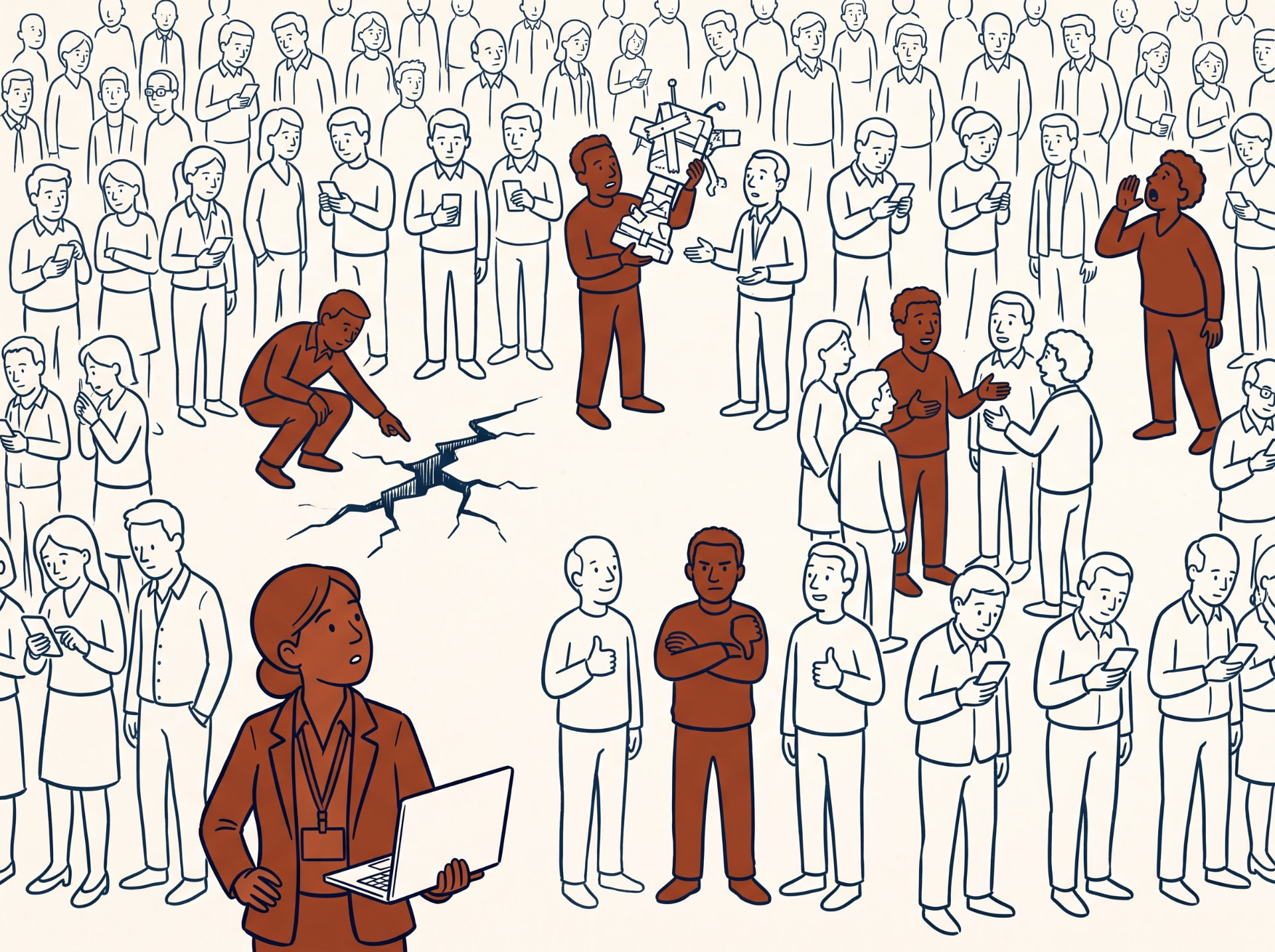
    Illustration: a crowd of people looking at their phones, while a few stand out in reddish-brown — the Crucial Few
    The crowd and the few.

    The CRUCIAL hallmarks

    They tend to share seven traits, and together they spell CRUCIAL, which was either lucky or the result of a lot of rearranging. The more of them a person hits, the more their voice is worth to you.

    Committed

    They care more than the average customer, and they show it without being asked.

    Spot it: they come back on their own, again and again.

    Reciprocal

    They give a lot and get real value back, so the exchange stays balanced. This is the everybody-goes-home-happy trait.

    Spot it: the relationship feels two-way, not like you are pulling from them.

    Unfiltered

    They tell you the truth, even when it stings.

    Spot it: their feedback is specific and honest, not polite noise.

    Connected

    They bring other customers together and reach the people around them.

    Spot it: others listen to them, or they link people up.

    Inventive

    They run ahead of the market and bend your product to do things you never planned.

    Spot it: they hack, extend, or ask for what is next before anyone else.

    Allied

    They are on your side and want you to win, even when they disagree.

    Spot it: they push you toward something better and stay in your corner.

    Loyal

    They stay through the rough patches and stand up for you to others.

    Spot it: they defend you when you are not in the room.

    Your Crucial Few sharpen your thinking. They do not replace it. Always check what they tell you against your wider market.

    What they look like

    They don't look the same in every business. Here are two I've worked with.

    Consumer

    LEGO

    At LEGO, adult fans were about one percent of the audience. That one percent shaped products, caught problems early, and held the community together. I built the program that listened to them, and the work was worth close to $85 million. Wired wrote about it in 2006.

    Where the one percent comes from
    B2B

    Accounting software

    In B2B they look different. It's the controller who built spreadsheet workarounds around your month-end close and knows exactly where it breaks. It's the implementation consultant who deploys you across forty firms and sees patterns no single customer can see. It's the person who calls you angry when you change something, because they noticed.

    Find yours

    Run a few real customers through the seven hallmarks and see who already qualifies, who is close, and what to work on next.

    Add the customers you want to check

    Between 2 and 8 people. A name or a label is fine, like "Maria at Acme" or "top forum poster".

    Add at least 2 names to start.

    Finding them is the easy part.

    Most teams find their Crucial Few and then change nothing. The conversations still run through Sales, the notes still arrive as a summary, and the roadmap still doesn't move. Knowing who to listen to doesn't help if your company has no way to hear them.

    The Customer Conversation Compass is the five places a Crucial Few program breaks.

    01Debt

    You found them and you still aren't talking to them directly. The gap gets wider every month.

    02Architecture

    Nothing in your calendar puts them in front of your team on a schedule.

    03Tuning

    You ask questions that already have your answer inside them.

    04Amplification

    What they said reaches your team as a summary of a summary.

    05Traction

    Everyone agrees it was a great session and the roadmap doesn't move.

    Everyone got faster at the same time.

    Your competitors run the same models you do. They scrape the same reviews, read the same market reports, and build the same personas out of the same secondhand pile. Speed used to be an advantage. Now the differentiation slide is just harder to write.

    The one input nobody can copy is a person who will tell you something they would never type into a survey.

    Book a call with Jake